Finding Your Voice: Why the Neutral Font is a Designer's Secret Weapon
There’s a particular moment in any design project—whether it's a new logo, a social media campaign, or a wedding invitation—where you hit a wall. You have the concept, the color palette, the imagery, but the text feels off. It’s either too fussy, too cold, or too trendy. You need something that speaks clearly without shouting, something that feels modern yet timeless. This is precisely the space where the Neutral font lives. It’s not about being boring or blending in; it’s about being the foundational voice that lets your actual message take center stage. Think of it as the perfect pair of jeans or a crisp white shirt—it goes with everything, elevates the overall look, and never feels out of place.
The Power of the Unassuming: Visual Appeal in Simplicity
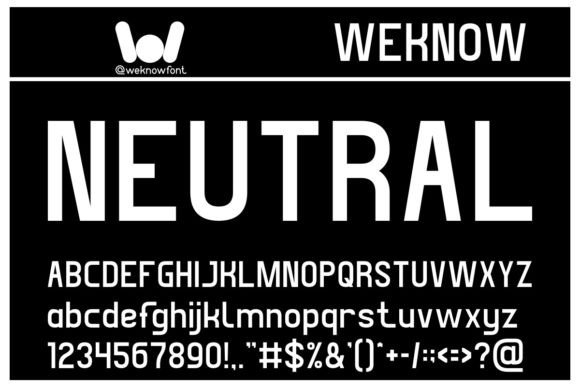
At its core, Neutral is a basic sans serif font, but that description barely scratches the surface. Its beauty lies in its meticulous balance. The letterforms are clean and geometric, but with just enough subtle humanist touches to avoid feeling robotic or sterile. The curves are smooth, the lines are confident, and the spacing is thoughtfully crafted to ensure each character breathes. This isn't a font that tries to impress you with quirky details or dramatic strokes. Instead, it impresses with its quiet confidence and flawless execution. It’s the typographic equivalent of a well-designed chair: it does its job perfectly, looks great in any room, and you only truly appreciate its design when you try to use something inferior.
This visual neutrality is its greatest strength. It doesn’t carry the heavy baggage of a specific era or a passing trend. A bold, retro-inspired display font might be perfect for a single poster, but it can quickly date a brand identity. Neutral, however, offers a clean slate. It provides a sense of clarity and professionalism that is universally understood, making it an incredibly versatile tool in any creative’s arsenal.
From Brand Blueprint to Social Media Scroll: Real-World Applications
So, where does a font like this actually work? The short answer is: almost everywhere. Its versatility is what makes it such a valuable design asset. Let’s break down some practical scenarios where Neutral can solve common design headaches.
For branding and logo design, this is often the starting point. A logo needs to be recognizable, scalable, and timeless. Using Neutral for a logotype ensures it will look as sharp on a tiny favicon as it does on a billboard. It provides a solid, trustworthy foundation upon which to build an entire brand identity system. Pair it with a more expressive script font for headlines, or use it alone for a minimalist, high-tech aesthetic. It’s the workhorse that guarantees your brand’s visual communication remains consistent across business cards, letterheads, and websites.
When it comes to packaging and merchandise, readability is king. Imagine a product label on a shelf. You have a split second to communicate the brand name, product type, and key information. A clean sans serif like Neutral ensures that information is absorbed instantly, whether it’s printed on a matte cardboard box or embroidered on a t-shirt for the apparel industry. Its clarity supports the product, rather than competing with it.
The digital realm is where Neutral truly shines. For websites and blogs, readability on screens of all sizes is non-negotiable. Neutral’s open letterforms and generous spacing make it exceptionally legible, even at smaller body text sizes. It reduces eye strain for readers and contributes to a professional, polished user experience. For social media graphics, it’s a lifesaver. Creating a consistent look across Instagram posts, YouTube thumbnails, and Facebook banners requires a font that is both flexible and recognizable. Neutral can be the unifying thread, allowing you to create cohesive content that strengthens your visual identity with every post.
Beyond the digital, think about print and editorial design. In a magazine, book, or comic, a neutral sans serif is perfect for captions, pull quotes, and sidebar text, providing a clean counterpoint to more decorative headline fonts. For posters and event materials, it ensures that critical details like the date, time, and location are communicated without ambiguity. Even for personal projects like creating custom invitations or designing a family cookbook, this font brings a level of polish that elevates the final product from homemade to professionally crafted.
Beyond the Basics: Strategic Typography for Impact
Choosing a font is rarely just about picking something that looks nice. It’s a strategic decision that impacts how your audience perceives your message. Using a font like Neutral effectively can directly improve several key aspects of your work.
First, it fosters visual consistency. When you use the same core typeface across all your materials, you create a subtle but powerful sense of cohesion. This repetition helps build brand recognition. Your audience starts to associate that clean, modern typography with your brand, even before they read the words. It becomes part of your visual signature.
Second, it dramatically enhances readability and professional presentation. Nothing undermines a great design faster than text that is hard to read. By choosing a font engineered for clarity, you show respect for your audience’s time and attention. This professionalism builds trust and makes your content, whether it’s a marketing email or a product manual, more effective.
Finally, it supports audience engagement. When typography is seamless, the reader can focus entirely on your content. They aren’t distracted by odd letter shapes or struggling to decipher a word. This smooth reading experience keeps them engaged with your message longer, which is the ultimate goal of any communication piece.
Putting Neutral to Work: Practical Tips for Your Next Project
Ready to incorporate this versatile typeface into your toolkit? Here’s some practical advice to get the most out of it.
- Explore the Included Styles: A quality font family like Neutral often comes with multiple weights and styles—Light, Regular, Medium, Bold, and sometimes Italics. Don’t just use the default. Experiment with using a Light weight for elegant, airy headlines and a Bold weight for impactful statements. This variety within a single family allows for rich typographic hierarchy while maintaining perfect cohesion.
- Master the Art of Font Pairing: Neutral is a fantastic team player. Its simplicity allows it to pair beautifully with more expressive fonts. Try combining it with a classic serif font for a look that feels both traditional and modern. For a more dynamic contrast, pair it with a handwritten or script font—just ensure the script is legible and used sparingly. The key is to let one font lead and the other support.
- Always Test for Readability: Never assume. Test your chosen font weight and size in the actual context where it will be used. View website body text on a mobile phone. Print a sample of your packaging label. Check your social media graphic on a small screen. What looks perfect in your design software might need adjustment in the real world.
- Understand the Licensing: If you’re using Neutral for commercial projects—like client work, merchandise for sale, or a monetized YouTube channel—it’s crucial to ensure you have the correct commercial license. This is a standard part of using premium fonts and protects both you and the font creator. Always review the license agreement to understand what’s permitted.
Ultimately, Neutral is more than just a basic sans serif font. It’s a strategic choice for anyone who values clarity, versatility, and timeless design. It won’t scream for attention, but it will ensure that everything you create looks considered, professional, and ready to make a lasting impression. It’s the quiet foundation that allows your creativity to be heard loud and clear.