Why Dango Sans Feels Like a Friendly Handshake for Your Brand
There’s a certain magic in a typeface that feels human. It doesn’t just sit on the page; it reaches out, grabs your attention, and makes you feel something. Dango Sans is exactly that kind of font. Imagine the bold, friendly vibe of a perfectly rounded doughnut or the chunky, comforting shape of a well-loved toy. That’s the visual language this premium display font speaks. It’s not about sterile precision or cold modernism; it’s about warmth, approachability, and a dash of playful energy that can transform a simple headline into an invitation. For anyone building a brand, designing a menu, or crafting a social media campaign, finding a creative font that balances charm with clarity is a game-changer. Dango Sans steps into that role with a soft, rounded form and a substantial weight that feels instantly welcoming, making it a standout choice for projects where personality is just as important as legibility.
A Typeface with a Personality You Can Feel
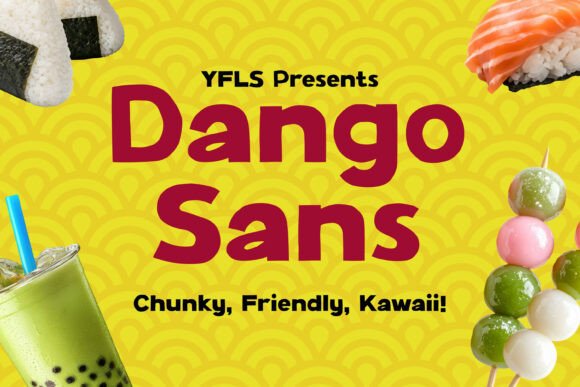
What sets a font like Dango Sans apart from a standard sans serif font? It’s all in the details. The soft, rounded terminals and slightly chunky strokes give it a tactile quality, as if each letter was carefully shaped by hand. This isn’t a font with sharp, aggressive angles; its curves are gentle, its presence is confident but not loud. This makes it an incredibly versatile typeface for a wide range of creative applications. Think about the last time a logo or a product label made you smile. Often, that emotional response comes from typography that carries a distinct character. Dango Sans brings that character to the table, helping to craft a brand identity that feels memorable, authentic, and full of life.
From Kitchen Tables to Digital Interfaces
The practical uses for a font with this much personality are surprisingly broad. Its friendly demeanor makes it a natural fit for the food and beverage industry. Imagine it on a artisanal jam label, a coffee shop menu board, or the packaging for a new line of snack bars. It communicates quality and care without feeling pretentious. Beyond the kitchen, its energy is perfect for event posters, festival signage, and promotional materials that need to cut through the noise. In the digital realm, it shines in video subtitles for fun, energetic content, in game user interfaces where clarity and charm are paramount, and as standout headlines on websites and blogs. It’s a design asset that works hard across both print and digital media, ensuring your visual communication remains consistent and engaging.
Matching Font to Function: Practical Design Advice
Choosing the right font style is a critical decision in any design project. It’s not just about what looks good in isolation, but what serves your project’s goals. A display font like Dango Sans is engineered for impact at larger sizes—think headlines, logos, and title cards. Its bold, readable forms ensure your message is seen and felt immediately. However, for body text or lengthy paragraphs, pairing it with a more neutral, highly legible serif or sans serif font is a smart strategy. This creates a beautiful typographic hierarchy: Dango Sans grabs attention and sets the mood, while a companion font handles the detailed reading with ease. This approach to font pairing elevates the overall professional presentation of your design, making it feel both dynamic and polished.
Before committing, always test your typography in context. How does Dango Sans look on your specific product mockup? Does it maintain its charm when scaled down for a social media graphic? Reviewing the included font styles—such as regular, bold, or italic—will give you a full toolkit for creating visual variety while maintaining consistency. For any commercial project, whether it’s merchandise, invitations, or marketing assets, confirming the font’s licensing is a crucial step. A premium font typically comes with a clear commercial license that covers these uses, providing peace of mind as you build your brand’s visual world.
Beyond the Logo: Building a Cohesive Visual Language
A strong brand identity is built on consistency, and typography is a cornerstone of that. By selecting a font like Dango Sans for your key visual elements, you’re choosing a specific emotional tone. This tone should then be reflected across all touchpoints: your website headers, your Instagram stories, your email newsletters, and your printed flyers. This repetition builds recognition. When a customer sees that distinctive, friendly lettering, they’ll immediately connect it with your brand’s values—whether that’s fun, creativity, warmth, or innovation. It’s a powerful tool for improving audience engagement because it creates a familiar and inviting visual experience that people enjoy interacting with.
Real-World Applications That Spark Connection
Let’s get specific. A small business owner launching a new line of organic baby food could use Dango Sans for the logo and packaging design. The rounded, soft shapes subconsciously communicate safety, gentleness, and care—perfect for the target audience. A content creator focusing on DIY crafts and home projects could use it for their blog title and YouTube thumbnails, instantly signaling a fun, hands-on, and approachable channel. For editorial design, it can add a burst of energy to a magazine spread or a book cover, especially in genres like children’s literature, lifestyle, or cookbooks. Even in web design, using it for a hero section headline can set a welcoming tone for the entire user experience. The key is to match the font’s inherent personality with the core message of your project.
Ultimately, the fonts you choose are silent ambassadors for your brand. They speak volumes before a single word is read. Dango Sans offers a voice that is confident, friendly, and unmistakably human. It’s a creative font that doesn’t just decorate a design but actively participates in storytelling, helping to forge a genuine connection between your project and your audience. In a world saturated with generic visuals, that kind of authentic, character-filled typography is not just a nice-to-have; it’s a strategic advantage.