Protein: The Clean, Modern Sans Serif for Every Brand
Ever stare at a blank screen, cursor blinking, trying to find the one font that doesn't look too corporate, too playful, too generic, or too trendy? You're not alone. Choosing a typeface is one of those decisions that feels small until you realize it's shaping how people perceive your entire brand. That's where a font like Protein steps in—a basic sans serif designed with versatility at its core, built for creators who need something reliable without sacrificing personality.
Protein isn't trying to be the loudest voice in the room. It's the font that quietly holds everything together—logos, headlines, social posts, packaging, websites—without demanding attention for itself. And honestly, that's exactly what most design projects need. A typeface that works with your content, not against it.
Why a "Basic" Sans Serif Is Anything But Boring
Let's address the elephant in the room. When someone describes a font as "basic," it can sound like a downgrade. But in typography, basic often means foundational. Think of it like a well-fitted white t-shirt—it goes with everything, flatters most situations, and never feels out of place. Protein carries that same energy.
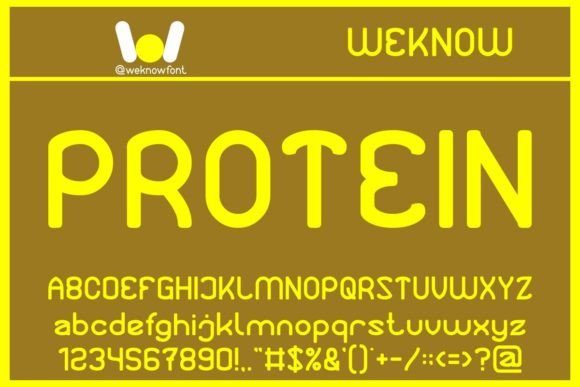
Its letterforms are clean, geometric, and balanced. The characters have enough breathing room to feel modern without becoming sterile. There's a subtle warmth in the curves and terminals that keeps it from reading as cold or mechanical. For anyone working on a brand identity or logo design, this matters more than you might think. Fonts that are too sharp can feel aggressive. Fonts that are too rounded can feel juvenile. Protein sits in that sweet spot where professionalism meets approachability.
That balance makes it a strong candidate for projects spanning industries—from tech startups and fitness brands to lifestyle blogs and indie music labels. It adapts to the context you place it in, which is exactly what a good display font should do.
Practical Applications: Where Protein Actually Shines
Let's talk about real-world use, because that's what matters when you're investing in a premium font for commercial work.
Logo and Logotype Design
Protein's clean geometry makes it a natural fit for wordmarks and logotypes. If you're building a brand from scratch—say, a boutique coffee roaster or a freelance photography studio—a sans serif like this gives you legibility at every size, from a favicon to a storefront sign. Pair it with a simple icon or let the letterforms stand alone. Either way, the result feels polished.
Packaging and Product Design
On packaging, readability is non-negotiable. Customers scanning a shelf need to understand your product name and key details in seconds. Protein's open letter spacing and consistent stroke widths make that effortless. Whether you're designing labels for artisanal candles, supplement bottles, or snack packaging, this sans serif font keeps your hierarchy clear and your design cohesive.
Social Media Graphics and Content Creation
If you're a content creator, blogger, or social media manager, you know the grind of producing graphics week after week. A versatile typeface like Protein simplifies that process. Use it for Instagram quote cards, YouTube thumbnails, Pinterest pins, or carousel posts. Its neutral personality means it won't clash with your photos, illustrations, or color palettes. It becomes a quiet workhorse in your design assets toolkit.
Web Design and Digital Products
On screen, Protein performs well at both headline and body sizes. That's a big deal for web design, where you need a font that reads clearly on desktop monitors, tablets, and phones alike. Use it for landing pages, blog headers, email templates, or digital product covers. If you're selling an online course, an ebook, or a set of Canva templates, a cohesive font pairing built around Protein can tie your entire visual ecosystem together.
Print Materials and Editorial Layouts
Don't overlook print. Protein works beautifully on business cards, brochures, flyers, event posters, and magazine layouts. In editorial design, where you're juggling headlines, subheads, pull quotes, and body copy, having a font family with multiple weights gives you the flexibility to build clear typographic hierarchy without introducing a second typeface.
Merchandise and Apparel
For anyone in the apparel industry—whether you're screen-printing t-shirts, embroidering hats, or designing merch for a band or podcast—Protein's straightforward letterforms translate cleanly across production methods. No fiddly details that get lost in thread or ink. Just crisp, readable text that looks intentional.
Improving Your Visual Consistency and Brand Recognition
One of the most underrated benefits of choosing a single, well-designed font family for your brand is visual consistency. When your website, social channels, packaging, and printed materials all share the same typographic DNA, people start to recognize you faster. That's not theory—it's how memory works. Repeated visual cues build familiarity, and familiarity builds trust.
Protein supports this because it offers enough range within a single family. You're not stuck with one weight and one style. You can use a bold weight for headlines, a regular weight for body text, and a light weight for captions or secondary information—all while maintaining a unified look. That kind of internal variety prevents your designs from feeling monotonous while keeping everything unmistakably yours.
For small business owners and entrepreneurs especially, this is a practical shortcut to looking more established. You don't need a full branding agency to create a cohesive visual identity. You need a smart font choice, a defined color palette, and some consistency in how you apply them.
Pairing Protein with Other Typefaces
While Protein holds its own as a standalone font, font pairing opens up even more creative territory. Here are a few approaches that tend to work well:
- With a serif font: Combine Protein with a classic serif font for contrast. Think Protein for headlines and a serif like Georgia or Playfair Display for body copy. This works well for blogs, editorial layouts, and brands that want to feel both modern and trustworthy.
- With a script or handwritten font: If your brand leans warm, personal, or artisanal, pairing Protein with a script font or handwritten font adds a human touch. Use the script sparingly—maybe for a tagline or accent phrase—and let Protein handle the heavy lifting.
- With another sans serif: This is trickier but rewarding. Pair Protein with a more geometric or humanist sans serif for subtle contrast. The key is making sure the two fonts differ enough in structure to feel intentional, not accidental.
Always test your pairings in context. A combination that looks great in a font preview might feel off when applied to your actual content. Mock up a real social post, a real webpage, or a real business card before committing.
Readability: The Non-Negotiable Factor
No matter how stylish a font looks, if people can't read it easily, it's failing at its primary job. Protein's design prioritizes readability through generous x-height, open counters, and clear character distinction. That lowercase "l" won't be mistaken for a "1." That uppercase "I" won't disappear into a vertical line. These details matter in real-world use—on a dimly lit phone screen, a printed flyer handed out at an event, or a product label viewed from a few feet away.
Before finalizing any design, print it out. View it on different screens. Shrink it down. Blow it up. Ask someone unfamiliar with your project to read it and tell you what it says. Readability testing doesn't need to be formal, but it does need to happen.
Licensing and Commercial Use
If you're planning to use Protein for client work, merchandise, or any commercial application, take a moment to review the licensing terms that come with the font. Most commercial fonts come with a license that covers specific use cases—desktop, web, app, or server. Some licenses are per-user; others are per-project. Understanding these details upfront saves headaches later, especially if your project scales or you're working with a team.
This isn't the exciting part of design, but it's the responsible part. Respecting font licensing protects you legally and supports the designers who create the tools you rely on.
Final Thoughts on Choosing the Right Typeface
There's no single font that solves every design challenge. But there are fonts that earn their place in your permanent rotation—typefaces you reach for again and again because they just work. For a lot of designers, marketers, and creative professionals, that's the real value of a font like Protein. It's not flashy. It's not niche. It's dependable, adaptable, and quietly confident.
Whether you're launching a new brand, refreshing an existing one, or just looking for a creative font that won't let you down across a dozen different projects, it's worth putting Protein on your shortlist. Download a test version, set a few headlines, mock up a logo, and see how it feels in your hands. The best font choices are the ones you make after actually working with the typeface—not just admiring it in a preview.
Your designs deserve a foundation that's solid, flexible, and built to last. Sometimes, the most powerful choice is the simplest one.