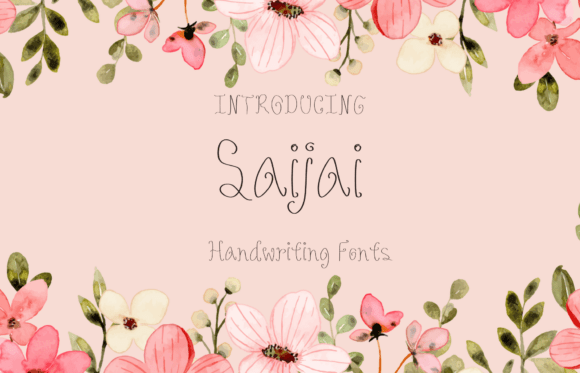
Saijai: The Friendly Font That Feels Like a Handwritten Hug
There's a particular warmth to things made by hand. A slightly uneven line, a gentle curve, a personal touch that digital precision often misses. For designers, creators, and business owners, capturing that authentic, approachable feeling in a brand or project can be a challenge. This is where a thoughtfully crafted typeface like Saijai enters the picture. It’s not just a collection of letters; it’s a visual voice designed to communicate friendliness, creativity, and a touch of playful charm.
A Typeface with a Welcoming Personality
At its core, Saijai is a handwritten display font, meaning it’s crafted to stand out in headings, logos, and short bursts of text where personality is paramount. What sets it apart is its intentional sweetness. The letterforms have a rounded, soft quality that feels inviting and gentle, avoiding the sometimes messy or overly casual look of other script fonts. It strikes a balance between being cute and fun without sacrificing readability. This makes it a versatile creative asset, moving beyond a single-use novelty into a tool for a wide array of projects.
Think about the brands and materials that catch your eye on a crowded shelf or a busy social feed. Often, they use typography to create an immediate emotional connection. A font like Saijai does this work for you. Its visual style suggests a business that is approachable, a product that is made with care, or an event that promises joy and celebration. It’s a typeface that doesn’t take itself too seriously, which can be a powerful differentiator in a world saturated with sleek, corporate sans-serifs.
From Brand Identity to Birthday Invitations
The true test of any design asset is its real-world application. Where does a font like Saijai shine? Its friendly demeanor makes it exceptionally suited for projects where building a personal connection with the audience is key.
Building a Brand with Heart: For small businesses, especially those in the handmade, boutique, or wellness spaces, logo design is about telling a story. Saijai can form the cornerstone of a brand identity for a bakery, a children's clothing line, a local florist, or a yoga studio. It instantly communicates a brand ethos rooted in warmth and authenticity. This extends to packaging design, where the font on a label can make a product feel like it came from a friend's kitchen rather than a factory.
Capturing Attention in the Digital Space: In the realm of social media graphics, standing out is everything. Saijai works beautifully for Instagram quotes, Facebook event announcements, and Pinterest pins. Its distinctive style helps stop the scroll, making your content more engaging and shareable. For bloggers and content creators, using it for post titles or pull quotes can add a layer of personality that makes your site feel more human and less institutional. It’s also a fantastic choice for online courses, digital planners, and other digital products where you want to create a welcoming user experience.
Print with a Personal Touch: The applications for physical materials are just as rich. Wedding invitations, birthday cards, and thank-you notes benefit immensely from a handwritten font that feels personal and celebratory. For educators, it can make classroom materials, bulletin boards, and student awards feel more encouraging and fun. Even in more commercial print like posters for a local event or movie titles seeking a specific indie vibe, Saijai can deliver a targeted aesthetic.
Pairing for Professional Polish and Readability
While Saijai is a star on its own, sophisticated design often involves pairing fonts to create hierarchy and ensure clarity. Because it is a display font, using it for long paragraphs of body text would compromise readability. The smart approach is to let Saijai handle the headlines, logos, and key phrases, while pairing it with a cleaner, more neutral typeface for supporting text.
A classic pairing strategy is to combine a handwritten font with a simple sans serif font. The clean lines of a sans serif, like Open Sans or Lato, provide a quiet, legible backdrop that allows Saijai’s personality to pop without causing visual clutter. For a more elegant or editorial feel, pairing it with a light serif font can create a beautiful contrast between the organic, casual headline and the refined body copy. The key is to test your font pairing thoroughly. View it at different sizes, on various backgrounds, and in the context of your final design to ensure the combination feels balanced and serves the project's goals.
Practical Considerations for Your Project
Before incorporating any new design asset into your workflow, a few practical checks are necessary. First, review the included font styles. Saijai may come with different weights or stylistic alternates—extra characters that offer slight variations on a letter. Exploring these can help you customize the look further and avoid repetition in a design. Second, and most critically, understand the licensing. If you plan to use the font for a client project, on merchandise for sale, or in a logo, you will almost certainly need a commercial font license. This is a standard practice that respects the work of the type designer and protects your project legally.
Finally, always consider your specific audience and context. The sweet, friendly nature of Saijai is a tremendous strength, but it’s not a one-size-fits-all solution. It would be perfect for a children’s book or a community event poster, but less appropriate for a corporate law firm’s annual report. Matching the font’s personality to your project’s tone is the most important step in using typography effectively.
In a landscape where visual communication is constant, the tools you choose matter. A premium font like Saijai offers more than just letters; it offers a specific emotional resonance. It’s a practical solution for anyone—from the creative entrepreneur building a brand identity to the hobbyist crafting a personalized gift—who needs to infuse their work with a sense of genuine, approachable joy. By understanding its strengths and applying it thoughtfully, you can turn a simple piece of text into a memorable connection point.