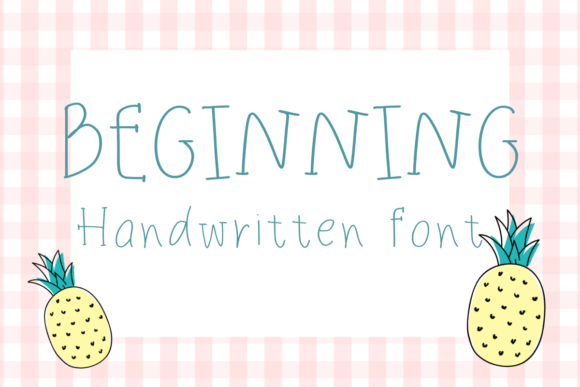
Beginning: A Handwritten Font That Feels Like a Friendly Hello
There’s a specific feeling you get when you open a greeting card from a close friend, or when you stumble upon a small business logo that just feels… approachable. It’s warm, personal, and instantly makes you want to lean in. Capturing that feeling in a digital project can be tricky, but the right typography does most of the heavy lifting. A typeface like Beginning is designed precisely for this—it carries the natural, slightly imperfect charm of handwriting, making any design feel more human and less corporate.
This isn’t about technical kerning or complex glyph sets. It’s about finding a visual voice that matches your project’s personality. If you’ve been scrolling through endless lists of premium fonts looking for something that feels genuine and fun, you might have just found your match. Let’s explore how a sweet and friendly handwritten font like Beginning can become a versatile tool in your design arsenal, and how to use it effectively without overdoing it.
More Than Just Cute: The Practical Side of a Handwritten Style
At first glance, a handwritten font might seem limited to birthday cards or scrapbooking. But its real power lies in its ability to inject personality and warmth into a wide range of projects. The Beginning typeface, with its cute and fun character, is a perfect example of a creative font that bridges the gap between playful and professional.
Think about your favorite local bakery’s packaging, the thank-you notes from an online shop, or the quote graphics you save on Instagram. Often, what makes them stand out is a design choice that feels personal. Using a font like Beginning for these elements instantly creates a connection with your audience. It says, “A real person made this,” which is a powerful branding message in a world full of automated, sterile designs.
Here’s where this style truly shines in practical applications:
- Brand Identity & Logo Design: For businesses in the lifestyle, wellness, children’s, or artisanal food spaces, a handwritten logo sets a friendly and authentic tone. It’s perfect for a boutique coffee shop, a yoga studio, or a handmade jewelry line.
- Packaging & Labels: Use it for product names, special edition labels, or “thank you” messages on boxes. It adds a layer of care and attention to detail that customers notice.
- Social Media Graphics & Marketing Assets: Create engaging quotes, announcements, or call-to-action buttons. Its readability at smaller sizes makes it great for Instagram Stories, Pinterest pins, and Facebook ads where you need to grab attention quickly.
- Invitations & Event Materials: This is its home turf. Wedding invitations, baby shower invites, party flyers, and event posters all benefit from its inviting and celebratory feel.
- Digital Products & Editorial Design: For bloggers, course creators, or e-book designers, using Beginning for chapter titles, pull quotes, or section headers in a PDF guide can break up text and guide the reader’s eye in a friendly way.
Choosing and Pairing: Making It Work for Your Project
Just because a font is cute doesn’t mean you can use it everywhere. The key to using a display font like Beginning effectively is understanding its role. It’s a supporting actor that brings charm, not always the lead that delivers heavy information.
Readability is Your Guiding Star. A handwritten font is best used for short bursts of text: headlines, subheadings, logos, and accent phrases. Avoid using it for long paragraphs or body copy on a website—your readers’ eyes will thank you. Its strength is in grabbing attention and setting a mood, not in conveying dense information.
The Art of Font Pairing. This is where you create visual harmony. Pair Beginning with a clean, simple sans-serif font for your body text. A combination like this balances personality with professionalism. For example, use Beginning for your website’s main heading and a font like Lato or Open Sans for the descriptive paragraph below it. This contrast creates a clear hierarchy and ensures your design is both engaging and easy to read.
Explore the Included Styles. Many premium fonts come with more than one style. Check if Beginning includes alternates or ligatures. These are variations of certain letters that can make your text look more natural and less repetitive, enhancing the handwritten illusion. Using these features thoughtfully can elevate your design from good to great.
Context is Everything. Match the font’s personality to your project’s goals. Is it for a children’s educational app? Perfect. Is it for a law firm’s annual report? Probably not. Always ask: Does this typeface support the message I’m trying to send? For brands aiming for a modern, approachable, and creative identity, it’s often an excellent fit.
Beyond the Design File: Licensing and Final Thoughts
Before you download and start creating, one crucial practical step remains: licensing. If you plan to use a font for client work, merchandise for sale, or any commercial project, you must ensure you have the correct commercial license. This isn’t just a legal formality—it protects you and supports the type designers who create these valuable assets. Always read the license agreement carefully to understand what’s permitted.
Finding the right creative font is about finding a tool that helps you communicate more effectively. A typeface like Beginning offers a specific visual voice—one that’s sweet, friendly, and unmistakably human. It won’t be the solution for every project, but when the goal is to create something that feels personal, joyful, and engaging, it’s a fantastic option to have in your toolkit. The best designs often come from choosing assets that align not just with the project’s function, but with its heart.