Ninja Kage: When a Font Feels Like Real Handwriting
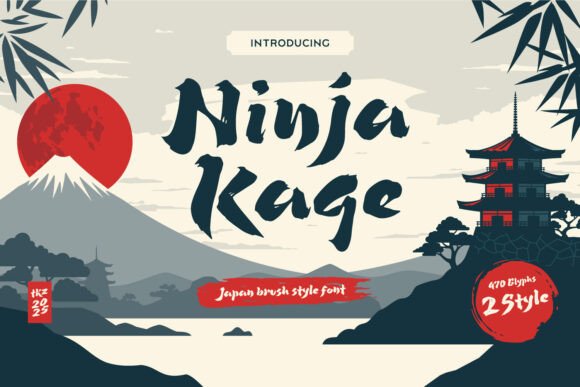
There's a particular frustration every designer knows well. You find a font that looks stunning in the preview—bold, expressive, full of personality—but the moment you type out a full sentence, it falls flat. Every repeated letter looks identical. The spacing feels mechanical. What promised to be dynamic and alive ends up looking like a stencil. This is the gap between a font that merely exists and one that truly performs. Ninja Kage is a brush typeface built specifically to close that gap, drawing its energy directly from the fluid, imperfect beauty of Japanese calligraphy.
The Soul of the Stroke
What makes this typeface different from a standard script or handwritten font? The answer lies in its foundation. Rather than simply digitizing a single set of hand-drawn letters, Ninja Kage is engineered with a deep library of alternates and ligatures. In typography, an "alternate" is a different version of the same letter, and a "ligature" is a custom connection between two specific characters. When these features are active—and in most modern design software, they are by default—the font cycles through variations as you type. The result is that the audience genuinely questions whether they are looking at a digital font or actual ink on paper. It removes the sterile repetition that plagues so many display fonts, giving your text a natural, handcrafted rhythm.
Two Textures, One Vision: Regular vs. Rough
Every creative project has a specific mood, and Ninja Kage accommodates this by offering two distinct styles: Regular and Rough.
The Regular style is clean and fluid. It mimics the look of a high-quality brush pen on smooth paper. This is ideal for projects where you want elegance and readability without visual noise. Think of high-end branding, wedding invitations, or the title card for a dramatic film. It commands attention through its shape and flow rather than its texture.
The Rough style, conversely, embraces the grit. It simulates the effect of ink bleeding into textured paper or the bristles of a worn brush. This style is perfect for adding a layer of authenticity to rustic designs, streetwear logos, indie game titles, or vintage-style packaging. It feels tangible and slightly aggressive, making it a strong choice for projects that need to feel "real" and grounded.
Practical Applications for Modern Creators
A font is ultimately a tool, and its value is measured by how well it solves visual problems. Because Ninja Kage is a premium font with such a strong visual voice, it shines in specific scenarios where personality is paramount.
- Logo Design & Brand Identity: For small businesses, especially in the food, beverage, fitness, or lifestyle sectors, a brush font can convey passion and energy. Ninja Kage works exceptionally well for logos because the alternates ensure that your brand name won't look like anyone else's, even if they use the same typeface.
- Packaging Design: On a shelf, texture sells. Whether it's a hot sauce label, a craft beer can, or a line of organic teas, the Rough style adds a tactile quality that suggests the product inside is artisanal and hand-crafted.
- Digital Products & Social Media: In the fast-scrolling environment of Instagram or TikTok, static text gets ignored. A dynamic display font like this creates immediate visual interest. It is excellent for quote graphics, story headers, or YouTube thumbnails where you need to establish a mood instantly.
- Editorial & Book Design: While not suitable for body text, it is a powerhouse for chapter titles, pull quotes, or magazine headers. It pairs beautifully with a clean sans serif font for a modern, high-contrast layout.
- Merchandise: T-shirts, mugs, and posters often rely on typography that feels personal. A font that mimics handwriting translates well to print-on-demand products because it feels less corporate and more like a piece of art.
Mastering the Pairing Game
One of the biggest challenges with using a creative font like Ninja Kage is knowing what to pair it with. Because it is a display font with high visual complexity, it can easily overwhelm a design if used incorrectly.
The golden rule is contrast. If you use Ninja Kage for your headers, do not pair it with another script font or a decorative serif font. Instead, look for a neutral, geometric sans serif font. Fonts like Montserrat, Roboto, or Open Sans provide the perfect clean canvas for the brush strokes to stand out. This contrast improves readability significantly. The brush font handles the emotional hook (the headline), while the sans serif handles the information (the body copy).
Additionally, pay attention to spacing. Brush fonts often have tight kerning to simulate natural writing. If you are using Ninja Kage for a headline, you might want to manually adjust the tracking (letter spacing) slightly to let the brush strokes breathe, especially if you are using the Rough style where the texture needs room to be appreciated.
Ensuring Professional Presentation and Licensing
Before integrating any commercial font into a client project or your own business materials, there are two critical steps: testing and licensing.
First, test the font in context. Don't just type "Lorem Ipsum." Type your actual business name, your tagline, or your key headline. Look at how the ligatures interact. Does the connection between the 'a' and the 'n' look natural? Does the 't' crossbar interfere with the next letter? Ninja Kage is designed to handle these transitions gracefully, but visual verification is a habit every designer should maintain.
Second, understand the license. Most design assets come with specific usage rights. A standard license usually covers web use, social media, and physical products up to a certain print run. If you are a large enterprise or a publisher with massive distribution, you may need an extended license. Always check the documentation included with the font files. Using a premium font correctly ensures you won't face legal headaches down the road, protecting your brand identity and professional reputation.
Beyond the Hype: Is It Right for You?
Ultimately, choosing a typeface is about alignment. Does the font's voice match your brand's voice? Ninja Kage speaks of energy, tradition meeting modernity, and the human touch. If your brand is clinical, ultra-minimalist, or strictly corporate, this might not be the right fit. But if you are looking to inject life into your marketing assets, create social media graphics that stop the scroll, or design a logo that feels hand-crafted, it offers a versatility that few other brush fonts can match. It bridges the gap between the precision of digital design and the warmth of analog artistry, making it a valuable addition to any creative toolkit.