Favorite Winner: The Typeface That Brings the Trophy Home
In the visual arena, your message often has less than a second to make an impact. Whether it's a fleeting social media ad, a logo on a crowded shelf, or a headline racing across a screen, you need typography that doesn't just sit there—it performs. You need a font that carries the weight of intention, the momentum of motion, and the clarity of a final whistle. This is where a typeface like Favorite Winner shifts from being a mere design asset to a core strategic tool. It’s not for whispering; it’s for declaring victory.
Built for the Podium: More Than Just Bold Letters
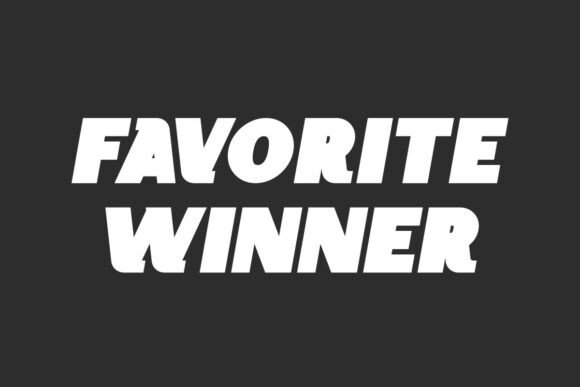
At its core, Favorite Winner is a high-intensity, bold display sans-serif. But describing it that way feels like calling a race car "a vehicle." Its personality is forged in specifics. The maximum weight and slightly condensed width give it a powerful, grounded presence—think of the solid stance of an athlete at the starting block. The defining characteristic, however, is its aggressively slanted, italicized posture. This isn't a gentle tilt; it's a forward-leaning charge that injects instant kinetic energy. Every letter seems to be in motion, leaning into the challenge. Combined with clean, sharp terminal points and exceptionally thick strokes, the result is a typeface engineered for superior visibility and undeniable impact, even from a distance or on small screens.
This unique combination makes it a standout choice for projects where the goal is to communicate strength, speed, and a winning mentality. It’s a premium font that does the heavy lifting for your brand's voice.
Where Does This Champion Compete? Real-World Applications
Understanding a font's visual traits is one thing; knowing how to apply them is where the real value lies. Favorite Winner's design naturally aligns with industries and projects that thrive on energy and competition. Think beyond the obvious sports branding—though it’s a perfect fit for team logos, event posters, and merchandise. Its modern, sporty aesthetic translates seamlessly to the world of eSports, where team jerseys, streaming overlays, and tournament graphics demand a bold, digital-native look.
The automotive sector is another natural home. For car show graphics, performance part branding, or racing event promotions, the font's speed and power are literal assets. But its utility extends further. Consider the impact it can make in:
- Logo & Brand Identity: For a new fitness app, an athletic wear startup, or a motivational coaching service, using this typeface in the logomark or brand headlines immediately sets a tone of empowerment and results.
- Packaging Design: On a shelf, a product needs to shout. Favorite Winner can make the product name or a key benefit ("MAXIMUM ENERGY," "UNRIVALED GRIP") impossible to ignore, especially for items targeting an active demographic.
- Social Media & Digital Marketing: In a fast-scrolling feed, static text gets lost. A bold, italicized headline like "FLASH SALE" or "LAST CHANCE" in this font creates a visual urgency that can stop thumbs and drive clicks. It’s excellent for YouTube thumbnails, Instagram story templates, and ad banners.
- Print & Editorial: Magazines, event programs, or posters for action movies, music festivals, or extreme sports events can use it for pull quotes and section headers to add a dynamic, editorial punch.
- Motivational Content: For posters, wall art, or digital quotes aimed at personal development or fitness, the font embodies the very message of striving and winning.
Practical Advice for Using a Powerhouse Font
Deploying a high-impact display font like this requires a bit of strategy. It’s a specialist, not a generalist. Here’s how to use it effectively without overwhelming your design.
1. Choose the Right Context. This is not your body copy font. Its strength is in headlines, logos, and short, impactful statements. Using it for paragraphs would be visually exhausting and harm readability. Pair it with a clean, neutral sans-serif (like Helvetica, Arial, or a modern geometric sans) for subheadings and body text to create a balanced hierarchy.
2. Match Typography to Project Goals. Ask yourself: does my project's core message align with "strength," "speed," and "victory"? If you're designing for a serene yoga studio, a vintage bakery, or a traditional law firm, this font is a mismatch. But for a new energy drink, a competitive gaming league, or a personal trainer's brand, it’s a perfect voice.
3. Test Font Pairings Thoughtfully. The contrast is key. The italic, aggressive slant of Favorite Winner works beautifully against the stable, upright forms of a simple serif or sans-serif. Avoid pairing it with other highly decorative or script fonts, as they will compete for attention and create visual chaos. Let the champion headline be the undisputed star.
4. Prioritize Readability. While it's designed for visibility, always test your text at the actual size it will be viewed. Ensure that the condensed width and slant don’t cause letters to blur together at very small sizes. This is especially important for web design and mobile app interfaces.
5. Review All Included Styles. A good font family often includes variations. Check if Favorite Winner comes with different weights or styles beyond its primary bold italic. Sometimes a slightly less intense weight can be useful for subheadings that still need energy but with a bit more subtlety.
6. Understand Commercial Licensing. If you’re using this for a client project, merchandise for sale, or a commercial app, you must ensure you have the correct license. Most premium fonts require a commercial license for such use. This is a critical step in professional practice to avoid legal issues down the line.
Crafting a Winning Visual Identity
Ultimately, typography is a silent ambassador for your brand. The fonts you choose build recognition, set expectations, and communicate values before a single word is read. A typeface like Favorite Winner offers a powerful, clear, and dominant voice for any project that needs to project confidence and competitive edge. It’s a creative font that serves a specific, potent role in a designer's toolkit—transforming a simple headline into a declaration, a logo into a badge of honor, and a marketing message into a call to action that resonates with an audience seeking strength and success.
By understanding its personality and applying it with intention, you can harness its visual punch to create designs that don't just look good, but feel unstoppable.