Whitcher: The Blackletter Font with a Spellbinding Edge
There’s a moment when you’re staring at a blank screen, trying to design a logo for a new fantasy novel series or a craft beer brand, and you realize the default fonts just aren’t cutting it. You need something with weight, with history, with a story baked right into its sharp curves and dramatic swashes. That’s where a typeface like Whitcher enters the picture. It’s not just a set of letters; it’s a statement, a portal to a different era, yet designed with a clean, modern sensibility that makes it surprisingly versatile for today’s projects.
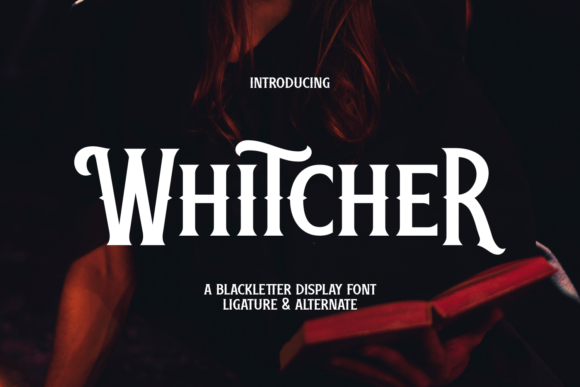
At its heart, Whitcher is a bold blackletter display font. But calling it just a blackletter font undersells its unique personality. Traditional blackletter, or Gothic script, can sometimes feel heavy or hard to read in modern contexts. Whitcher takes that powerful medieval aesthetic and refines it. The sharp vertical strokes give it a strong, architectural presence, while the sweeping curves add a touch of elegance and fluidity. The real magic, however, lies in its “mystical twist.” We’re talking about those special ligature alternates—the custom letter combinations that flow together in unexpected ways. Swap out a standard “st” or “th” and suddenly the word transforms, gaining a custom, hand-crafted feel that’s perfect for creating a unique brand mark or a captivating title.
Where Gothic Tradition Meets Fantasy Storytelling
This font lives in the space between ancient manuscripts and a high-fantasy movie poster. Its visual language speaks of old-world craftsmanship, secret societies, and arcane knowledge. For a designer, this is a goldmine of immediate association. You don’t need to explain the vibe; the typography does it for you. Think about the projects where that powerful, slightly mysterious tone is exactly what you need. A dark fantasy book cover demands a typeface that can stand alongside intricate illustrations of dragons and wizards. A fantasy RPG game title needs to feel epic and immersive from the first glance. Whitcher delivers that punch.
But its applications extend far beyond literal fantasy. That same “vintage-inspired” and “powerful” quality makes it a standout choice for:
- Brand Identity: For a craft brewery, a tattoo parlor, a vintage barber shop, or a specialty coffee roaster, this font can become the cornerstone of a brand that values authenticity, tradition, and a bold personality.
- Packaging Design: Imagine the front of a premium hot sauce bottle, a artisan chocolate bar, or a limited-edition whiskey label. The sharp details and elegant curves of Whitcher command attention on a crowded shelf.
- Event & Invitation Design: Medieval-themed weddings, Halloween parties, or theatrical productions can use this font to set an unmistakable tone on invitations, programs, and posters.
- Merchandise & Apparel: A strong, stylized wordmark on a t-shirt, hoodie, or poster for a band with a folk-metal sound or a streetwear brand with a dark aesthetic uses typography as the primary graphic element.
Making It Work: Practical Tips for Using a Display Font
A font as distinctive as Whitcher is a powerful tool, but like any powerful tool, it requires a thoughtful approach. You wouldn’t use a sledgehammer to hang a picture frame. Similarly, you wouldn’t set an entire paragraph of body copy in a dense blackletter display font. Its strength is in headlines, logos, and short, impactful statements. Here’s how to integrate it effectively into your design workflow.
First, consider font pairing. The goal is contrast and balance. Because Whitcher has such a strong, decorative character, it pairs beautifully with clean, simple sans-serif fonts or elegant, understated serifs for supporting text. A combination like Whitcher for your logo and a font like Montserrat or Open Sans for your website body text creates a clear hierarchy that’s both visually interesting and highly readable. Avoid pairing it with other highly decorative or script fonts, as they will compete for attention and create visual chaos.
Second, always test for readability. Display fonts are meant for impact, not for dense paragraphs. Use Whitcher for your main headline, the name of your product, or a key call-to-action button. Then, step back. Can you read it clearly at the size it will be displayed? This is especially important for logo design and social media graphics where text often appears small on mobile screens. The included ligatures and alternates are fantastic for customization, but make sure the final word is still legible to a new viewer.
Finally, review the full character set and licensing. A premium font like this often comes with multiple styles—perhaps a regular, bold, or italic version—as well as those special alternate letters, numerals, and punctuation. Take the time to explore what’s included in your font files. More importantly, ensure you have the correct commercial license for your intended use. If you’re designing a logo for a client who will sell products, or creating merchandise, you need a license that covers commercial end-use. This is a non-negotiable step for any professional or serious hobbyist project.
From Concept to Cohesive Brand
Choosing a typeface like Whitcher is a strategic decision about your project’s visual voice. It’s a commitment to a certain aesthetic that can dramatically improve brand recognition. When your audience sees that distinctive, sharp blackletter style across your website header, your Instagram posts, and your product packaging, they begin to associate that look with your brand’s story—whether it’s one of artisanal quality, mystical adventure, or rebellious tradition.
This consistency builds a professional presentation that fosters trust. It shows you’ve considered every detail. For a small business owner or entrepreneur, this level of polish can set you apart from competitors using generic, overused fonts. For a content creator or blogger, it can transform a simple YouTube thumbnail or Pinterest graphic into something that stops the scroll, increasing engagement through sheer visual appeal.
In the end, typography is a silent ambassador for your project. A font like Whitcher doesn’t just spell out words; it evokes a feeling, tells a micro-story, and anchors your design in a specific, compelling world. It’s a creative asset that, when used with intention, can help bridge the gap between a good idea and a memorable, resonant brand identity. So, the next time your project calls for a dose of history, drama, and a touch of magic, consider letting the bold, elegant strokes of a blackletter display font lead the way.